USPAP REQUIREMENTS
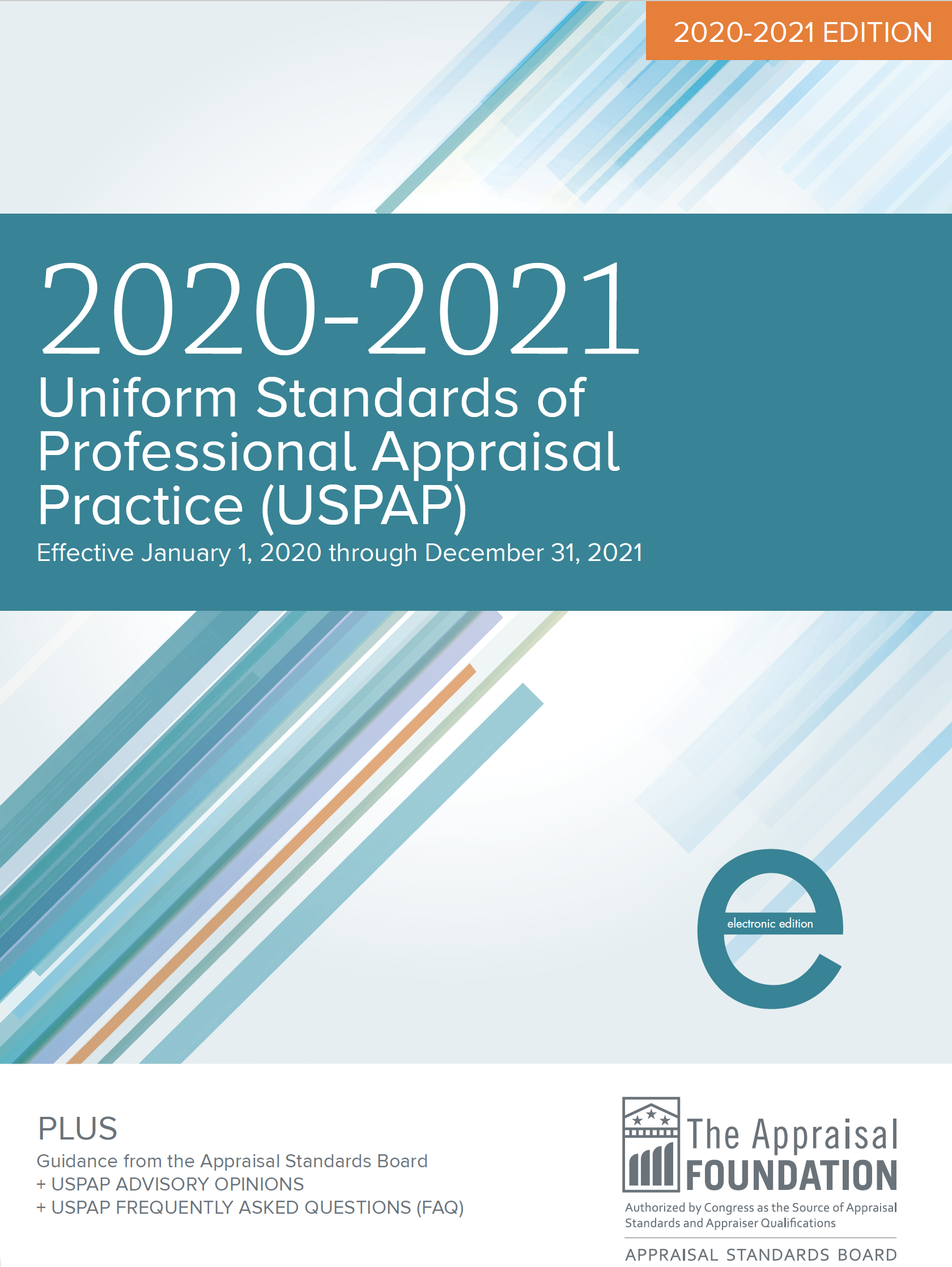
Dr. Wei Yang honors professional standards and the code of ethics in her practice. She performs appraisal in compliance with the Uniform Standards of Professional Appraisal Practice (USPAP). USPAP requirements are the industry standards codified by The Appraisal Foundation’s Appraisal Qualification Board and revised every two years. USPAP offers guidance for professional appraisal practice and is enforced through professional societies such as the American Society of Appraisers (ASA), the Appraisers Association of America (AAA), and the International Society of Appraisers (ISA). USPAP helps ensure that professional appraisers comply with industry-wide standards, earn accreditation through national institutions, and conform to federal and state regulations.
Dr. Wei Yang has dedicated herself to the excellence of professional appraisal practice. She has earned her good reputation by complying with the industry standards and the code of ethics for appraisers ever since she joined the professional appraisers community. She has served as Asian Art Appraiser, Appraisal Reviewer and Expert Witness for litigation since 2005.
Dr. Yang is a lifelong educator and writer (Books and Article by Wei Yang). She is very concerned about the status of Chinese art consultation and appraisal. First, the shortage of qualified or competent Chinese art specialists is worrysome. Appraiser are afraid of joining the Chinese art community due to their concern of lacking proper training in Chinese art. Appraisers' dependency on AI with identification is equally troublsome. Dr. Yang personally experimented with the AI identificaton application of 5 inscriptions appeared on classical Chinese paintings, the results were shockly off, which would lead to a questionable selection of comparables and value conclusion. Third, most art appraisers are struggling with determining the originality of a Chinese art work, which is essential to the appraisal of Chinese art. Having all the practical problems in mind, Dr. Yang is determined to help improve the quality of Chinese art consultation and appraisal services, help her peers to learn the essential skills for appraising Chinese art.
Dr. Yang has dedicated herself to writing three practical reference books on classical Chinese painting and calligraphy (published in 2022), Chinese Ceramics (forthcoming) and Chinese Jade (In progress). By focusing on Chinese art connoisseurship, biographies of important artists and signature styles, forgery methods, conservation on value, and market appeal, Dr. Yang unveils the mystery of appreciating and judging the quality of a Chinese art. She believes that by following the strategies outlined in each book, developing a new expertise in Chinese art is achievable. After learning how to understand Chinese art forms and their visual aesthetics, familiar with the signature features of important artists or workshops, separating originals from fakes is possible. With a gentle mastery of important Chinese characters (artist signatures, imperial seals or workshop marks) in different writing scripts, and the help of a few good reference books on signatures and seals identification or authentication, an analysis of the formation of Chinese chracters would make fakes visible. Slowly, by accumulating more hand-on experience with different Chinese art forms, you are on your way to build up a new Chinese art expertise in fine arts, ceramics and jade.
Dr. Yang is a qualified Asian art appraiser. She has been sharpening her appraisal skills ever since she joined the appraiser community in 2005. After receiving her Ph.D. in Chinese art and Tibetan art (2005) from Northwestern University (Evanston, ILL), she earned a certificate of Fine Art and Decorative Arts Appraisal (2009) from Pratt Institute (New York) and a certificate of Painting Mounting and Conservation (2010) from Shandong Painting Mounting and Conservation Academy (Jinan, Shangdong, China), followed by two Accredited Senior Appraiser designations - Asian Art (ASA) in 2010 and Appraisal Review and Management (ARM) in 2017 from American Society of Appraisers. She serves with integrity, professional competence and objectivity in multiple fields, and impartiality to the best of her abilities.
USPAP & IRS
-"Qualified Appraiser"
USPAP is authorized by the U.S. Congress and recognized by the Internal Revenue Service as the primary source of standards for appraisal reports and of qualifications for appraisers. USPAP stipulates the qualifications that must be met by appraisers. These include classroom education in valuation theory, completion of a course on USPAP and professional ethics, and experience in appraisal. Appraisers are also required to pursue continuing education in the field and to study for and earn redesignation every five years.
USPAP REQUIREMENTS
-Intended Use, Date of Valuatioo & Value Conclusion
IUSPAP includes requirements for the preparation of appraisals. USPAP stipulates the kind of records the appraiser needs to maintain, specifying how long appraisers are required to preserve documents and the underlying research justifying the basis for their appraisal. USPAP requires that appraisers follow the scope of work for each appraisal assignment and that reports specify the client, the intended use and users of the report, the type of value (e.g., Fair Market Value, Replacement Value, etc.) and the effective date of the opinion. USPAP requires that appraisers provide a signed certification detailing the process followed in the appraisal and attesting to the appraiser’s independence and impartiality.
USPAP outlines two general options for written appraisal reports: Appraisal Report and Restricted Appraisal Report. They are similar in content but differ in level of detail. An Appraisal Report is required for most appraisal assignments, including tax-related uses (for charitable donation and estate tax distribution), legal purposes (dissolution of marriage or business, and bankruptcy) and assignments involving third parties (insurance coverage and claim settlement). By contrast, a Restricted Appraisal report is written for only one user and with a limited purpose (consultation). The USPAP Ethics Rule details requirements concerning impartiality, objectivity, independent judgment and ethical conduct.
USPAP & APPRAISAL REVIEW
-Assessing the Quality of Appraisal
Standard 3 (Developing) and Standard 4 (Reporting) in USPAP outline the requirements for Appraisal Review with or without value conclusion, another type of appraisal. Appraisal review critically evaluates the quality of appraisals prepared by other appraisers in terms of Relevance, Accuracy and Reliability, Adequacy and Completeness, Consistence and Balance, Clarity.
Appraisal Reviews are typically required for insurance claim settlements and for litigation. Review appraisers must possess sufficient qualifications designated by appraisal organizations and must undertake special training in this field and pass examinations as Accredited Senior Appraiser in Appraisal Review and Management of a specific specialty, such as Personal Property (ARM-PP), Machinery and Technical Specialties (ARM-MTS) and Gems and Jewelry (ARM-GJ).
Dr. Wei Yang offers quality professional Chinese art consultation and Asian art appraisal services at an affordable rate. Because Dr. Yang believes that art owners should have access to the elite art consultation and appraisal services, and they deserve some professional compassion or generosity.
Need Asian art consultation and appraisal?
Starting with a preview of your property for appraisal is wise. Preview information is available at Preview My Artwork